India Hits 46.52% Non-Fossil Electricity Capacity

India continues to demonstrate its leadership in climate action, as evidenced by its 4th Biennial Update Report (BUR-4) submitted to the United Nations Framework Convention on Climate Change (UNFCCC) on December 30, 2024. The report outlines India’s remarkable strides in renewable energy, greenhouse gas (GHG) mitigation, and carbon sequestration, showcasing the nation’s commitment to sustainable development.
Renewable Energy Takes Center Stage
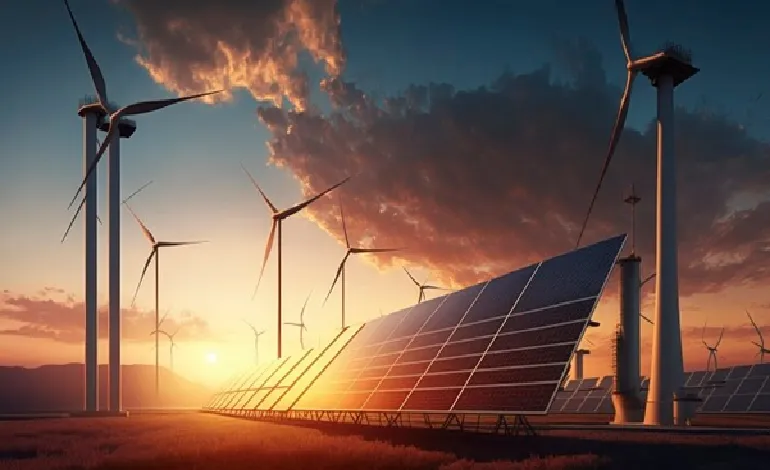
As of October 2024, India’s non-fossil energy sources constituted 46.52% of the country’s installed electricity generation capacity. With a total renewable power capacity of 203.22 GW, including large hydropower, India’s renewable energy sector has grown 4.5 times—from 35 GW in 2014 to 156.25 GW in 2024.
Between 2005 and 2020, India reduced the emission intensity of its Gross Domestic Product (GDP) by 36%, a testament to its ability to foster economic development while addressing environmental challenges.
Notable Decline in GHG Emissions
In 2020, India reduced its GHG emissions by 7.93% compared to 2019. Excluding Land Use, Land-Use Change, and Forestry (LULUCF), the total emissions were 2,959 million tonnes of CO₂ equivalent. When accounting for LULUCF contributions, net emissions fell to 2,437 million tonnes.
India’s forests and tree cover played a vital role in this achievement, sequestering 522 million tonnes of CO₂ and offsetting 22% of the country’s total emissions. The energy sector, despite being the largest contributor at 75.66%, has seen transformative changes driven by the nation’s focus on clean energy solutions.
Strengthening Carbon Sinks
India has made substantial progress in enhancing its carbon sink capacity. Between 2005 and 2021, an additional carbon sink of 2.29 billion tonnes of CO₂ equivalent was created through afforestation and tree planting initiatives. Forest and tree cover now span 25.17% of the country’s geographical area, reflecting sustained conservation efforts.
These initiatives are integral to India’s climate strategy, aiming to reduce its environmental footprint while fostering biodiversity and supporting rural livelihoods.
India’s BUR-4 is a testament to its ability to harmonize economic development with environmental sustainability. India is setting a benchmark for global climate leadership with its focus on renewable energy, emission reduction, and carbon sequestration.
Link to Document: https://unfccc.int/documents/645149